
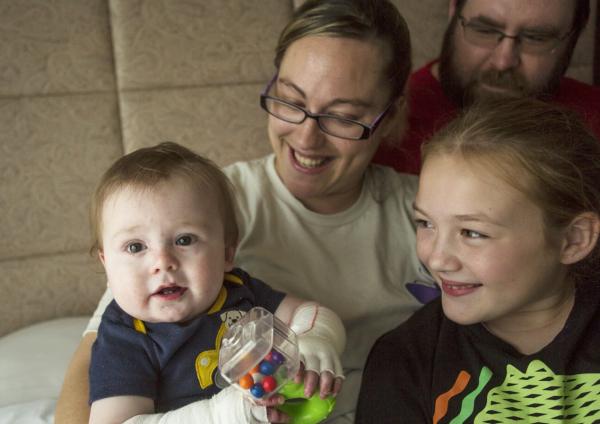
Occupational and Physical Therapy can play an important role in supporting mobility, strength, independence, and participation in daily life for people living with Epidermolysis Bullosa (EB). While not everyone with EB will need ongoing therapy, developing a relationship with an occupational or physical therapist can provide valuable support when concerns arise related to movement, function, daily activities, or staying active.
Occupational Therapy
Services provided by occupational therapists for those with Epidermolysis Bullosa (EB) include upper extremity range of motion and strength, hand splint/orthotic fabrication, fine motor skills, independence in self-care, independence in activities of daily living and assessments for use of durable medical equipment (bath chair, wheelchair, etc.).
Physical Therapy
Services provided by physical therapists for those with Epidermolysis Bullosa (EB) on the other hand include lower extremity range of motion and strength, gross motor development skills, assessment of lower extremity orthotics and assessment for use of durable medical equipment, such as crutches and wheelchair systems.
Staying Active
Additional Tips
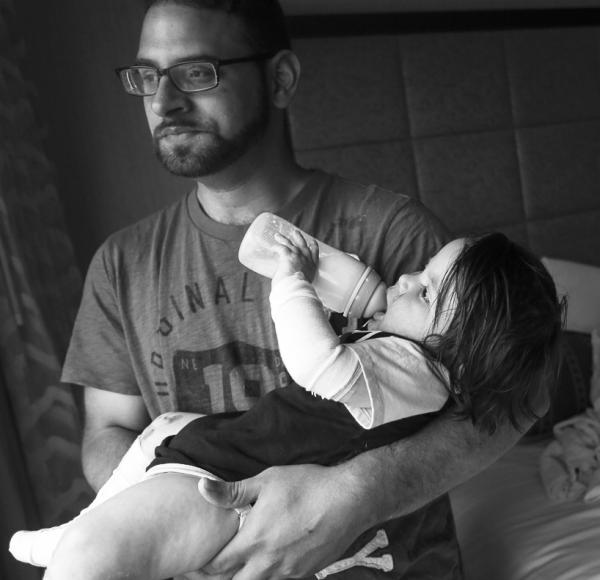
Give your baby daily opportunities for belly time, crawling, and cruising. Watch for potential blisters and bandage as needed for protection. When playing on the floor, use foam blocks for comfort and decreased friction, however, care should be taken to not make the surface too soft that it is difficult for your child to move. Teach family members and caregivers how to pick up your child appropriately so they don’t cause unnecessary harm to your child.
Find a balance between wrapping the baby’s hands to maintain web spaces and allowing him/her the freedom to explore the surroundings. Early on, the baby will want to put their hands into their mouth. If there isn’t skin breakdown, this is an important activity to increase the sensory input into both the mouth and the hands. If there is skin breakdown, consider provision of teething toys for oral exploration and wrapping between the web spaces but allowing fingers to be free.
Try to make stretching part of the everyday routine to help preserve mobility and flexibility. Good range of motion or stretching exercises may help to limit contractures. Be proactive to maintain the mobility, but always go very slow. If there are major sores, wait until they are not as painful to address these areas.
As the child is able, teach them to do their own stretches. They will be more compliant if they do the stretch versus having someone else stretch them. Keep stretches simple and prioritize the exercises. Do two to three stretches daily and prioritize the areas where blisters cross the joints.
Also, keep your child involved in typical activities such as walking, dancing, riding a bike, swimming, and yoga. This will help to continue to develop their muscles and is good for social development as well. Have a goal in mind of 30 or more minutes per day of physical activity.
A padded bike seat may be beneficial. Try to have a variety of activities that include going outdoors and interacting with others. Having a family pet is often motivating and fun.
- In early childhood, use distraction (like entertainment – singing songs, TV/DVD’s, books, etc.) to help with stretching/exercise program.
- Some kids benefit from the use of a reward system for completing their exercises/stretches. One example is a sticker or a reward chart for each day the child completes their exercises, with a larger reward when the child fills the chart.
- Try to make your home exercise program part of your daily routine.
- Don’t be overprotective. Let kids be kids safely.
- Don’t allow behavior you wouldn’t allow your other kids to do. It is easy to overlook bad behavior because our EB kids are “special”. But if we want them to be accepted by others, we need to teach them to be as independent as possible and as kind and cool as possible.
More Guides
Improving Participation in Daily Activities for Children Living with EB
Patient Guide for Adults with EBImproving Participation in Daily Activities for Adults Living with EB
Occupational Therapy for EB: Clinical Practice Guidelines Physiotherapy for EB: Clinical Practice GuidelinesPhysiotherapy for Epidermolysis Bullosa: Clinical Practice Guidelines
Related Resources
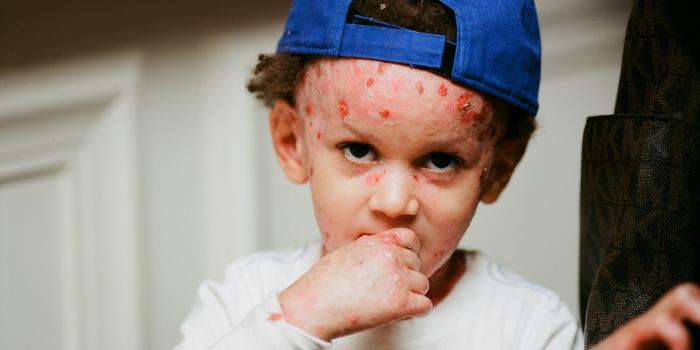 About EB
EB is a rare connective tissue disorder with many genetic & symptomatic variations. All forms of EB share the prominent symptom of extremely fragile skin that blisters & tears with any friction.
Learn More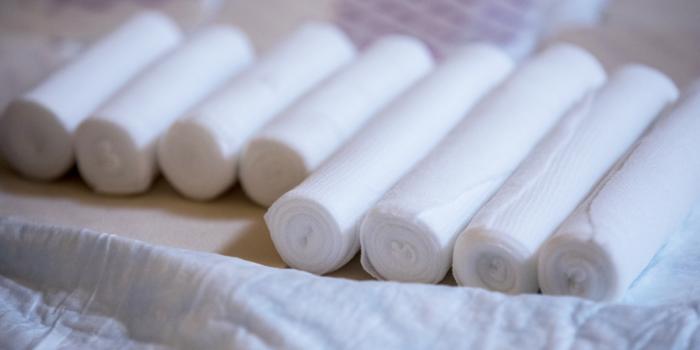 Wound Care Distribution Program
Receive wound care supplies free of charge during times of need.
Learn More EB Nurse Educator Program
Our EB Nurse Educator is available to provide sound advice for those with and caring for someone with EB.
Learn More*Please note that all medical information given by debra of America is for informational purposes only. Our information is not intended to substitute the care and guidance given by a qualified physician. All regimens of care should be discussed with the patient's occupational or physical therapist. Always check with your physician prior to starting any medications or treatment regimens.